Table of Contents
- Why Yoga Is Perfect for Beginners
- How to Prepare for Your First Yoga Practice
- 12 Basic Yoga Poses for Beginners
- How Yoga Enhances Flexibility for Beginners
- Integrating Meditation with Your Yoga Practice
- Common Mistakes Beginners Should Avoid
- How to Stay Consistent with Practice
- Why Practice with Adi Shakti Yogpeeth
- Frequently Asked Questions (FAQs)
Why Yoga Is Perfect for Beginners
Yoga is a practice of body, breath, and mind. Yoga develops mind, body and spirit awareness, not just fitness, flexibility and peace within.
In basic terms, yoga is:
- A gentle introduction to body awareness Yes, please!
- Increased strength and suppleness
- Stress and anxiety relief
- Improved concentration and more normal breathing patterns
- A deeper connection with self
If you are looking to improve flexibility, relieve stress, or just find a little more peace, yoga meets you right where you are.
How to Prepare for Your First Yoga Practice
Before practicing the poses, establish a foundation that is correct. Some basic preparations will help to maximize the enjoyment and effectiveness of your yoga practice.
Tips Before You Begin:
- Pick a quiet, well-ventilated place for practicing
- Use a nonslip mat for yoga
- Dress comfortably, you will need to be able to stretch
- Do not eat before practice (wait 2-3 hours after you eat)
- Have a bottle of water and a towel close at hand
But above all, breathe naturally and move mindfully.
A few minutes of meditation before you begin may help bring your mind to center and get you ready for the flow of sequences you are about to experience!
12 Basic Yoga Poses for Beginners
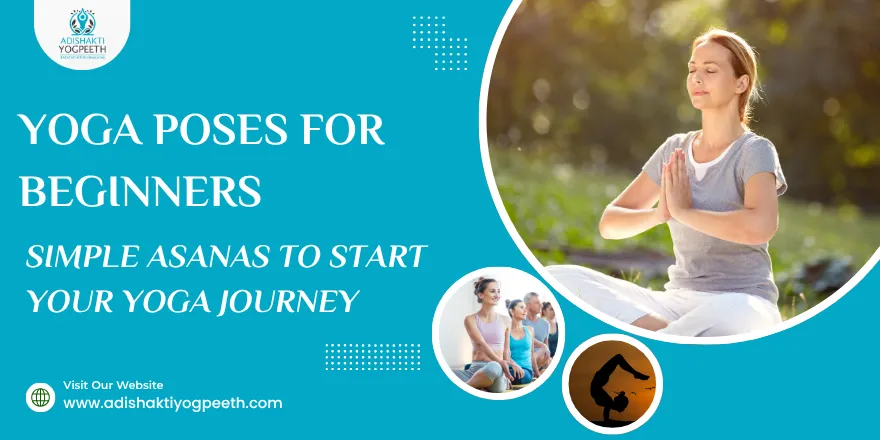
These 12 simple yoga poses are great for beginners. Practice daily for 20–30 minutes.
1. Tadasana (Mountain Pose)
The basis of every standing asana, Tadasana builds awareness in the body and mind.
How to do it:
- Stand straight with your feet joined together.
- Spread your weight equally between both feet.
- Breathe in, arms overhead stretch.
- Exhale, relax your shoulders down.
Advantages: Tadasana improves posture, tones thighs and keeps you steady.
2. Vrikshasana (Tree Pose)
A fun balance posture that enhances your concentration.
Instructions:
- Stand in Tadasana
- Put your right foot on the left inner thigh
- Balance, then bring your palms together at your heart or overhead
- Hold for 10-15 seconds and then do the same for the other side.
Advantages: Enhances balance, focus and self-confidence.
3. Adho Mukha Svanasana (Downward-Facing Dog)
A great full-body stretch for beginners is this yoga pose.
How to do it:
- Begin on your hands and knees
- Raise your hips and legs straight
- Push the palms and heels into the floor
- Lengthen your spine and breathe deeply.
Benefits: Elongates the spine, tones the arms and legs, and invigorates the body.
4. Bhujangasana (Cobra Pose)
A mild backbend that tones the spine.
How to do it:
- On your stomach lie down in the prone position.
- Put your palms under your shoulders.
- Take a breath in and bring your chest up.
- Tuck your elbows in toward your ribs.
Advantages: The poses chest open, increases flexibility and eases the pain associated with the back.
5. Trikonasana (Triangle Pose)
An ideal stance good for flexibility and digestion.
How to do it:
- Stand with legs wide apart
- Turn right foot out, left foot slightly in
- Extend arms to shoulder height
- Bend sideways on exhale and touch right foot
- Fix your gaze upward to your top hand
Benefits: Increases balance, stretches hamstrings and tones the waist.
6. Virabhadrasana I (Warrior I)
This strong and confident stance cultivates power and concentration.
How to do it:
- Step right foot forward into a lunge
- Turn back foot slightly out
- Raise your arms overhead and look up
Benefits: Strengthens legs, opens hips and cardiovascular system.
7. Virabhadrasana II (Warrior II)
A strong stance for endurance and balance.
How to do it:
- From Warrior I, open your hips and arms sideways
- Gaze over the front hand
- Keep the front knee bent at 90°
Benefits: Tones the thighs and shoulders, and heightens concentration.
8. Setu Bandhasana (Bridge Pose)
Great for relaxing and toning the spine.
How to do it:
- Lie on your back with your knees bent at 90 degrees.
- Feet hip-width apart
- Inhale and lift hips up.
- Keep shoulders grounded.
Benefits: Opens chest, calms mind, and energizes.
9. Paschimottanasana (Seated Forward Bend)
A fantastic position for stretching and unwinding.
To Get Started:
- Sit with legs extended
- Breathe in, reach arms up
- Exhale and bend from the hips and hold your feet
Advantages: Enhances flexibility, relieves stress and stimulates digestion.
10. Balasana (Child’s Pose)
A relaxing repose for relaxation.
How to do it:
- Take a seat on your heels and with the help of your arms, bring your torso forward.
- Extend your arms forward and place your forehead on the mat.
Advantages: Relieves tension in the back and relaxes the mind.
11. Sukhasana (Easy Pose)
A beginner-friendly meditation pose that is also the easiest.
How to do it:
- Sit cross-legged with a straight spine.
- Palms down on the knees or rolled into a fist with index finger on thumb.
- Close your eyes and take slow deep breaths.
Benefits: Enhances concentration, reduces stress and gets you ready for meditation.
12. Shavasana (Corpse Pose)
Most calming and strengthening final pose.
How to do it:
- Lie on your back with your legs straight.
- Keep feet apart, arms relaxed.
- Close your eyes and watch your breath.
Benefits: Replenishes the body, relieves tiredness and brings about mindfulness.
How Yoga Enhances Flexibility for Beginners
Flexibility isn’t a matter of trying to cram your body into positions — it’s about progress over time through discipline.
With consistent practice of basic yoga postures for beginners, you will observe:
- Loosened Hamstrings and Hips
- Increased Joint Mobility
- Enhanced posture and stability
- Alleviated body pain from extended sitting hours
Just 20 minutes a day is enough to make a noticeable difference to your flexibility in a month.
Integrating Meditation with Your Yoga Practice
Yoga and meditation are inseparable.
Following your asana practice, 5-10 minutes in meditation will calm the mind and deepen the awareness.
Basic meditation procedure:
- Sit comfortably in Sukhasana or on a chair
- Shut your eyes and concentrate on your breath
- Allow thoughts to come and go without judgment
- Proceed for a few minutes each day
Meditation on a regular basis also goes hand in hand with yoga in that it reduces stress and increases focus – ultimately allowing you to better tune into your true inner self.
Common Mistakes Beginners Should Avoid
Every yoga path has its ups and downs. Steering clear of typical errors is the best way to ensure you don’t get injured and that you can keep moving forward. Avoid these mistakes:
- Holding your breath during poses
- Comparing your flexibility to others
- Skipping warm up or cool down
- Stretching too much beyond comfort
- Inconsistent practice
Tip: Yoga progress is more about awareness than achievement.
How to Stay Consistent with Practice
The magic of yoga is in the regularity. Here’s how you can motivate yourself:
- Keeping practice time short (15–20 minutes/day)
- Set a routine practice time
- Sign up for online classes/visit a local yoga studio
- Make a note of your mood and how you get on in your yoga journal
- Alternate your asanas with brief meditation for total equilibriumasanas with short meditation for complete balance
And always remember: Your mat is a mirror — it reflects how disciplined, patient and evolved you are.
Why Practice with Adi Shakti Yogpeeth
Situated in Rishikesh – the World Yoga Capital, Adi Shakti Yogpeeth is considered one of the oldest and most trusted traditional yoga schools in India.
Here, you can:
- Learn from experienced Yoga Alliance-certified teachers
- Enroll In 200-Hour & 300-Hour Yoga Teacher Training Courses
- Dive into Yoga and Meditation retreats
- Learn classical Hatha, Ashtanga and Kundalini Yoga
If you are a beginner or future yoga teacher, the Adi Shakti Yogpeeth is an ideal place for you to develop your practice and soul.
Explore our Yoga TTC programs and retreats in Rishikesh to take your practice deeper.
Frequently Asked Questions (FAQs) On Yoga Poses For Beginners
1. Which yoga poses are suitable for beginners?
The 12 fundamental yoga postures for novices, including Tadasana, Downward Dog, Bridge Pose, and Child’s Pose, can help you build a solid foundation in strength and flexibility. They’re straightforward and, with a little practice, you’ll be able to do these poses each day to heighten your focus and balance.
2. How long should a beginner do yoga each day?
Novices can do a gentle practice of stretching, breathing, and relaxing for 20–30 minutes each day. Now it just boils down to consistency — as in, sleep even if you don’t want to — because short, mindful spin sessions will surprise you with improvements in your posture, energy, and mood in just a few weeks.
3. Can beginners become more flexible with yoga?
Yes, absolutely! Yoga gently stretches muscles and joints, allowing them to become more flexible without risk of injury. Especially good are those mentioned above for Trikonasana, Paschimottanasana, and Downward Dog. Your body just becomes inherently more fluid and with consistent practice your rigidity will lessen.
4. Do I need any gear for doing yoga at home?
You don’t require any fancy equipment — just a yoga mat and some comfortable clothing. Optional props (such as blocks, straps, or cushions) can assist with alignment, particularly in more straightforward yoga poses for beginners. A few quiet corner is all you need to focus.
5. How can Adi Shakti Yogpeeth assist beginners to initiate yoga?
Beginners are taught yoga at Adi Shakti Yogpeeth step by step by experienced teachers. Our instructors concentrate on posture, breathing and mental focus. From the heart of Rishikesh, the World Yoga Capital, you can participate in online classes, yoga retreats, or teacher training courses and enrich your experience of Yoga and Meditation.