Table of Contents
What is Pranayama?
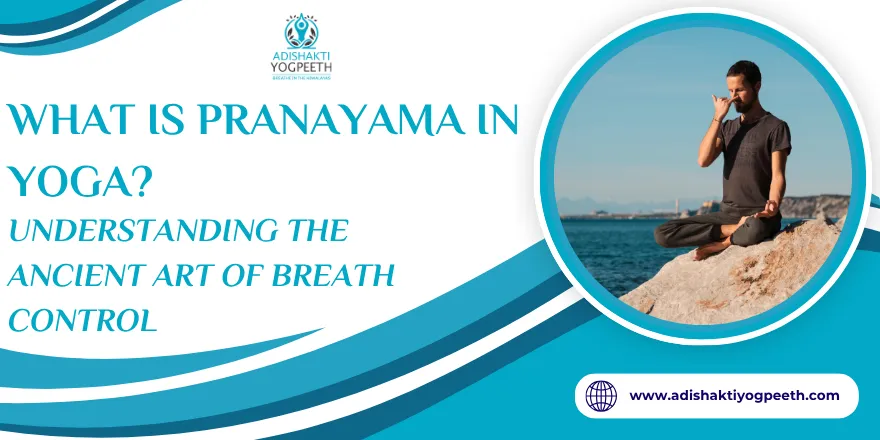
Pranayama is a compound word of two root words from the Sanskrit language, prāṇa (meaning "life force, vital energy, breath") and āyāma (meaning "to extend, to stretch, to restrain, to control"). In layman’s terms, pranayama is “breath control” or regulation of the flow of prana, or life energy.
In classical yoga philosophy (including the Yoga Sūtras of Patañjali and the Hatha yoga tradition), pranayama is the fourth limb (of eight) in the Ashtanga yoga system. Through conscious control of inhalations, retentions, and exhalations (and subtle pauses), pranayama is said to unite the physical, mental, and subtle states of being.
What Is Pranayama Yoga?
When people say “pranayama yoga” they usually mean the style of yoga that incorporates respiratory maneuvers as a main practice. In a larger sense, a person can practice multiple limbs of yoga—postures (āsana), ethics (yamas/niyamas), meditation, etc. Pranayama-yoga focuses on the regulation of breathing as a means to achieving higher consciousness, physical well-being, and tranquility of mind.
So, “what is pranayama yoga”? It is the yoga of breathing, in which modulating prana plays the role of a transformative instrument.
What Is the Base Element in Pranayama?
To know about the basis of pranayama, one must inquire: “What is the forming element in pranayama?”
- Prāṇa (Vital Breath/Energy): It is the fine life energy behind all activity, mental or physical. Breath is its manifest form in the body.
- Conscious Breath Awareness: The conscious observation and attention of breath is a practical base. Without awareness, breath is just an automatic process.
- Three Phases (Puraka, Kumbhaka, Rechaka): These are the basic building blocks for many pranayama exercises.
- Puraka = inhalation
- Kumbhaka = retention (holding the breath)
- Rechaka = exhalation
- Subtle Energy Channels (Nāḍīs) & Bandhas (Energy Locks): Higher pranayama involves directing the flow of prana through subtle channels, locking energy with bandhas, and balancing internal energies.
Hence, the fundamental element in pranayama is the coalescence of breath (prana) + conscious regulation + the triage (inhalation, retention, exhalation) and the subtle energetic perception beneath.
What Is Pranayama and Its Types?
Now that we have discussed what pranayama is and its fundamental element, let us explore the different types of pranayama. There are many ways to breathe in the pranayama tradition; some are deep and relaxing, while some are invigorating and detoxifying. Here is a categorized synopsis.
Classical & Common Pranayama Styles
Here are 7 common pranayamas often practiced in yoga:
- Nadi ṣodhana (Alternate Nostril Breathing/Anuloma Viloma): Think of it as purifying the energetic pathways (nāḍīs), and bringing the left and right side into harmony.
- Ujjayi (Victorious Breath): A soft and audible breath, traditionally used while doing asana flow.
- Bhramari (Bee Breath): Make a humming sound as you exhale to relax your mind.
- Bhastrika (Bellows Breath): Rapid, vigorous, and audible breathing; a stimulating breath.
- Surya Bhedana / Chandra Bhedana: Breathing practices associated with the right (solar) and left (lunar) nostrils.
- Sitali / Sitkari: Cooling practices related to the tongue or mouth position.
- Breathing guided by kumbhaka (breathing hold): Practices with extended retentions.
On these techniques, the stages puraka, kumbhaka, rechaka, timings, and subtle operations are emphasized differently.
Cleansing & Purification Techniques vs Pranayama
Certain breathing practices (such as Kapālabhāti) are also considered shatkarmas (cleansing actions) in traditional Hatha yoga texts, though they may be considered pranayama in contemporary practice. While classical sources could differentiate cleansing kriyas (without retention) from real pranayama, modern yoga seems to merge them under the breathing exercises umbrella.
So, what is pranayama and its types? It incorporates both energy-balancing breathing techniques and purifying breath-based processes, all designed to increase flow and control over prāṇa.
What Is the Use of Pranayama?
When you breathe deeply and consciously in pranayama, you’re not just breathing deeply; you’re using your life force to drive physical, mental, and spiritual evolution. The uses and benefits of pranayama can help you get relief from several diseases such as asthma, hypertension, etc.
Physical Benefits
- Increases lung capacity, elasticity, and efficiency of respiration.
- Improves circulation and oxygenation of tissues.
- Invigorates digestive organs and metabolism.
- Aids detoxification by generating movement of internal gases and toxins.
- Beneficial for high blood pressure, asthma, and respiratory disorders (under supervision).
Mental & Emotional Benefits
- Reduces restlessness of the mind, stress, and anxiety.
- Increases focus, concentration, and clarity.
- Regulates the autonomic nervous system, restoring balance between sympathetic and parasympathetic activities.
- Enhances meditation by balancing breath and mind.
Energetic & Spiritual Benefits
- Cleanses and balances the subtle energy channels (nāḍīs), enabling a smoother flow of prāṇa.
- Raises and directs Kundalinī energy (in a number of traditions).
- Supports advanced practices such as kevala kumbhaka (complete breath suspension).
- Serves as a link between asana (posture) and meditation to emphasize your inner harmony.
So, what is the purpose of pranayama? It is a foundational technique that provides a multi-dimensional link between body, breath, mind, and spirit.
What Is Kapalabhati Pranayama?
One of the breathing techniques most commonly associated with yoga is Kapalabhati. Below is an explanation of what Kapalabhati pranayama is.
Definition & Meaning
The term Kapalabhati is a Sanskrit term where kapāla means "skull" or "forehead" and bhāti means "shining" or "illuminating." It is commonly called “skull-shining breath.”
In essence, Kapalabhati is an active (forced) exhalation and a passive (effortless) inhalation. The technique consists of a rhythmic “pumping” of the lower belly to push out breath, while inhalation is allowed to happen naturally.
It is sometimes classed as a shatkriya or purification technique, but it is now more commonly regarded in yoga as a form of pranayama.
Types of Kapalabhati
Classical texts mention three variants:
- Vatakrama Kapalabhati (wind-cleansing): The ordinary type where exhalation is active and inhalation is passive.
- Vyutkrama Kapalabhati (sinus/nasal cleansing): A solution is sniffed up the nostrils and ejected out of the mouth.
- Sheetkrama Kapalabhati (mucus cleansing): The reverse of Vyutkrama — water in through the mouth, out through the nose.
Some refer to the final two as cleansing kriyas as opposed to pranayama.
Practice of Kapalabhati Pranayama (Step By Step)
Here’s a general guide to Kapalabhati pranayama and its execution.
- Sit in an easy meditative posture (Sukhasana, Padmasana, etc.) with your spine straight and your shoulders relaxed.
- Rest your hands on your knees (palms facing upwards) and soften your gaze.
- Now take a full, gentle breath in through both nostrils.
- Begin forceful exhalation: Pull your lower belly quickly and forcefully to expel air. Inhalation will follow passively.
- Continue this "pumping" tempo for 15-30 repetitions, maintaining comfort and a steady pace.
- After completing one cycle, relax and breathe normally for a few moments, paying attention to how you feel.
- You can do 2 to 3 rounds as your capacity allows, increasing gradually over time.
Tips & Contraindications:
- Practice on an empty stomach.
- The emphasis is on exhalation; inhalation is passive.
- Maintain a rhythm and don’t strain.
- Contraindications: Avoid if you have high blood pressure, hernia, ulcers, or during pregnancy. Consult a qualified teacher.
Effects and Scientific Evidence
The benefits of Kapalbhati are significant:
- Detoxifies the respiratory system and clears the nasal passages.
- Stimulates digestion and the abdominal organs.
- Helps to increase metabolic rate, thereby aiding weight reduction.
- Enhances circulation, giving glowing and youthful-looking skin.
- Increases mental clarity, alertness, and concentration; supports dosha balancing (vata, pitta, kapha).
Some neuroscience reports show changes in brain waves, the autonomic nervous system, and heart rate variability right after Kapalabhati practice. However, listen to your body. It is a stimulating and powerful practice. Always practice under qualified supervision and don’t overstrain yourself.
Integrating Pranayama into Your Practice
To gain the most benefit from pranayama:
- Start gentle and foundational. Practice calming breaths such as Nadi Śodhana or Ujjayi before advancing.
- Warm up with cleansing kriyas (e.g., Kapalabhati) only after warming the body and under supervision.
- Apply a stepwise method. Increase rounds, duration, and subtle retention (kumbhaka) as you feel comfortable.
- Sync with asana & meditation. Use pranayama to prepare the mind and body for deeper postural work or seated meditation.
- Observe and adjust. Notice how your body and mind react—modify the timing, speed, or method if needed.
Conclusion
Pranayama channels the life force through the most natural medium—breath. From mellow methods like alternate nostril breathing to high-energy practices like Kapalabhati, pranayama brings benefits for physical well-being, mental clarity, and spiritual connection.
With pranayama yoga, we understand breath control to be a fundamental yogic practice. The ground of pranayama is breath + awareness + the three-part breath cycle of inhaling, holding, and exhaling. There are many applications of pranayama—detoxification, balancing, and higher awareness. Kapalabhati pranayama is a potent cleansing practice, entailing extraordinary benefits as well as risks.
Frequently Asked Questions (FAQ’s) On Pranayama
Q1: What are the benefits of pranayama?
Pranayama is excellent for balancing the Marma points, calming the sympathetic nervous system, and has been shown to improve lung function, concentration, and the depth of meditative states. It eventually aligns the breath and mind, clears subtle channels, and builds prāṇa within.
Q2: What is the core principle in pranayama that makes it so powerful?
The fundamental aspect is the conscious control of breathing in three stages – inhaling (puraka), holding the breath (kumbhaka), and exhaling (rechaka). Herein, Prāṇa (the breath of life) is linked to a subtle awareness of the breath and life-force energy flow. This framework forms the basis for all pranayamas.
Q3: Is pranayama for everyone?
Mild pranayama exercises can be started by most adults in good health. People with hypertension, lung diseases, hernia, ulcers, or pregnant women are advised to seek a doctor’s opinion or that of an experienced yoga instructor prior to trying out advanced practices.
Q4: In what ways is Kapalabhati different from other pranayama?
Kapalabhati involves forceful exhalation immediately followed by passive inhalation in quick succession, thereby serving as a salient cleansing/purification pranayama. Many pranayamas emphasize prolonged exhalation, holding, or balanced breath. Kapalabhati is more dynamic and intense.
Q5: How many times a week should you perform Kapalabhati?
A novice can start with one round of 20 to 30 pumps a day and work their way up to two or three rounds as the body gets used to it. Rest between rounds, do not over-exert, and practice Kapalabhati on an empty stomach for the best and safest outcome.