Table of Contents
- Understanding Standing Yoga Asanas
- The Philosophy Behind Standing Yoga Asanas
- Benefits of Standing Yoga Asanas
- How to Practice Standing Yoga Asanas Correctly
- Standing Yoga Asanas You Should Practice Daily
- Integrating Standing Asanas into Daily Practice
- Standing Yoga Asanas in Yoga Teacher Training
- Benefits of Standing Yoga Asanas for Students
- Common Mistakes to Avoid in Standing Asanas
- Frequently Asked Questions (FAQs)
Understanding Standing Yoga Asanas
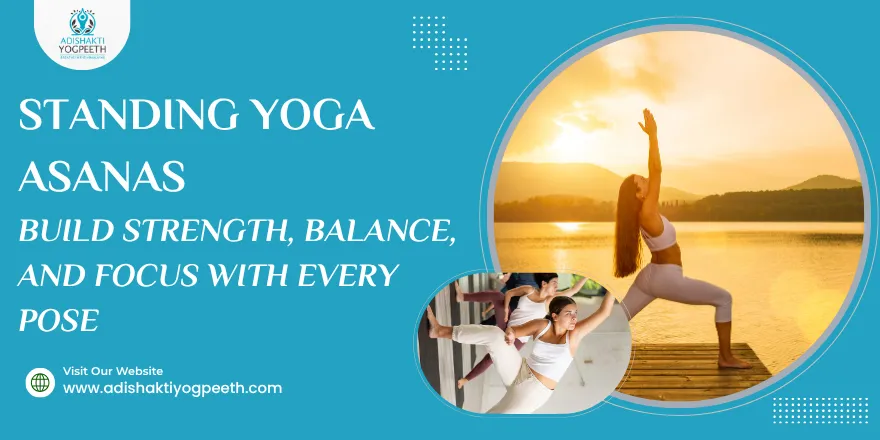
Standing yoga postures are postures that you do standing, with your weight on one or both feet. These postures work the legs, hips, and core muscles as well as improve concentration and balance. They are grounding and upward — they are motion stability.
Energizing they are, unlike sitting or lying down postures. They increase blood circulation, awaken vital organs and prime the practitioner for more profound, meditative asanas.
With consistent practice, yoga poses for standing in place develop stamina — both physical and mental — a beneficial attribute to have in life as well as for more advanced yoga practice.
The Philosophy Behind Standing Yoga Asanas
Upright positions also serve as metaphors of connection — the point of convergence between the earth and the sky, the body and the mind. In the philosophy of yoga, the feet are believed to be rooted into the ground, sustaining as well as energizing, and the spine additionally extends upwards, symbolizing who we are and our own spiritual advancement.
It’s this tension that gives the standing posture yoga poses such power. They give you patience, and discipline, and stability of mind. When you freeze in a yoga pose, you are not just conditioning your body, you are also growing your mindfulness — the practice of being present.
Doing these poses every day also builds mental toughness, which is something of a secret weapon in yoga’s more profound quest. This is one of the reasons why they are a vital component of all our 200 hour Yoga Teacher Training In Rishikesh at Adishakti Yogpeeth.
Benefits of Standing Yoga Asanas
What are the benefits of standing yoga? They were found to leave the body and mind feeling stronger, more flexible, upright and clearer.
Benefits in your body
The feet of your bag are no longer enough to help your yoga asanas practice regularly stand up to muscle tone and posture and hui In Your Spine. It enhances joint stability, oxidative capacity, and balance. As your legs and core muscles get stronger, so does your overall stability — meaning less risk of getting hurt.
Mental Benefits:
While performing standing yoga poses, one is also motivated to focus his/her attention. Since many are balance poses, they help train the mind to be steady and alert. As you continue to work with this, you will find that you have more patience and mindfulness in everyday life.
Spiritual Benefits:
Especially when these poses are practiced mindfully, they anchor your energy, drawing your soul back toward the earth beneath you. They develop humility and gratitude, and show you that power is found in stillness.
Benefits of yoga for students Moving what you've learned Outside the StudioMemory, focus and stress relief among top results of consistent standing asana practice.
The Foundation: How to Practice Standing Yoga Asanas Correctly
Before we get into the postures, it’s important to have a good understanding of technique and what alignment you are aiming for.
Standing yoga asanas are easy to perform, yet paying attention to some minutiae is required.
- Engage Your Feet: Spread your toes and press into both feet evenly.
- Lengthen the spine: draw your spine, open your chest and relax your shoulders.
- Activate the Core: Engage the abdominal muscles to create stability.
- Focus Your Gaze: Use a steady drishti (focus point) to help you maintain your balance.
- Breathe Deeply: Pass the nose inhalations, pass the lips exhalations in your calm mind.
At Adishakti Yogpeeth, instructors focus on conscious movement and breath control — the integral part of every Yoga Teacher Training in Rishikesh course module.
Standing Yoga Asanas You Should Practice Daily
Let’s explore the five most beneficial standing yoga asanas that build strength, focus, and balance.
1. Tadasana (Mountain Pose)
Tadasana is the foundation for all standing poses in yoga. It may seem like a no-brainer, but it’s the foundation for proper alignment in every other pose.
How to Practice:
Stand tall, feet together, arms at your sides. Take a deep breath in and raise your arms above your head. Lengthen your body towards the ceiling as you press your feet into the mat.
Benefits:
- Helps with posture and balance
- Strengthens legs and spine
- Enhances awareness and focus
Tadasana is one of the first posture taught at Yoga Teacher Training Rishikesch, as it encapsulates the knowledge of stillness and presence taught throughout the course.
2. Virabhadrasana I (Warrior Pose I)
Named for the mythical warrior, Virabhadra this pose invokes strength, bravery and a resolute spirit.
How to Practice:
Step one foot back and bend the front knee, then bring your arms overhead. Keep your hips squared and look straight ahead.
Benefits:
- Legs, arms and shoulders are strengthened
- Increases concentration and balance
- Opens the chest and lungs to allow for deeper breathing
The warrior poses are a cornerstone of standing yoga asanas in which you feel strong and empowered.
3. Trikonasana (Triangle Pose)
Trikonasana stretches the body on the side, enhances flexibility and stability. It blends earthy force with elegant elongation.
How to Practice:
Stand with your feet wide apart. At shoulder height, bring your arms out, bend sideways over one leg and place your hand on your shin or ankle. Gaze up at the raised hand.
Benefits:
- Stretches the backbone, spine and hamstrings
- Improves digestion and circulation
- Increases balance and coordination
Trikonasana teaches us to find balance – not just in the body, but in the mind and this is a lesson that is heavily reinforced at Adishakti Yogpeeth.”
4. Utkatasana (Chair Pose)
This pose is a challenge for the mind as well as the body. It looks easy, but holding the pose makes you so strong.
How to Practice:
Stand with your feet together, breath in and raise your arms. Exhale, bending your knees and your hips, like you were sitting in an invisible chair.
Benefits:
- Tones thighs, buttocks and back
- Develops stamina and concentration
- Rouses the entire body
Utkatasana (chair pose) represents determination and stability—qualities that we nurture in our yoga practice, and in.
5. Vrksasana (Tree Pose)
Vrksasana represents steadiness and centeredness. On one leg, you test your equilibrium as you calm your mind.
How to Practice:
Rest one foot against the opposite inner thigh or calf, never on the knee. Bring your palms together in front of your heart or extend them overhead.
Benefits:
- Enhances balance and coordination
- Legs and ankles are strengthened
- Soothes the nervous system
This posture is like the immobility of a tree -- strong roots, peaceful mind and a smiling heart.
Integrating Standing Asanas into Your Daily Practice
While each of these poses is quite potent in isolation, when you do them all in a daily sequence you're harmonizing on a much grander scale.
Start with Tadasana, go through Warrior and Triangle poses, then conclude with Chair and Tree pose. This sequence improves circulation, tones the whole body, and relaxes the mind.
A mere ten minutes of standing yoga a day can help you feel energized and confident, making this practice a wonderful ritual for students, workers, and homemakers alike.
Standing Yoga Asanas in Yoga Teacher Training
In curricula-based yoga teacher trainings such as the Yoga Teacher Training in Rishikesh at Adishakti Yogpeeth, standing asanas are introduced as Foundations module.
Students learn proper alignment, breath control, and the energetic implications of each posture.
Students also learn postures that lead up to these as well as treatment for these poses and pranayama. It is this knowledge that will allow them to be conscious, safe, informed yoga teachers who are able to lead and impact* others.
The Benefits of Standing Yoga Asanas for Students
Stressed with their academics, changes in their emotions, and exhaustion of the mind, yoga asanas on the standing level are a boon for them.
With as little as a few minutes per day of practice, you can:
- Improve memory and concentration
- Minimize stress and anxiety of examination
- Correct posture while studying for long hours
- Clear and confident mind
In Adishakti Yogpeeth, we keep telling students that the benefits of yoga for students are not just for fitness – it’s a life skill in emotional equanimity and self-discipline.
Common Mistakes to Avoid in Standing Asanas
Even basic postures can cause stress to the body if executed with poor form. Common mistakes are knees locking, shoulders rounding, and coming out of alignment.
Always remember:
- Keep the core engaged
- Breathe evenly and do not hold your breath
- Don’t rush the transitions
- Hear the boundaries of your body
With proper supervision — such as that available at Adishakti Yogpeeth — you can safely and effectively hone your practice.
Conclusion: Grounded in Strength, Growing in Stillness
The standing yoga postures show us that being strong and rigid are two different things — when we are strong, we are also fluid and graceful.
Every time you step onto the mat, you’re developing not only balance, but attention. You're learning to stand tall, not just physically, but emotionally and spiritually.
At Adishakti Yogpeeth these postures are the roots of every practice, just as a tree’s roots keep it grounded in the midst of a storm. Whether you’re training to teach yoga or practicing for personal growth, standing asanas remind you — a strong foundation is where everything - and nothing really begins.
These postures are best explored in depth by joining our Yoga Teacher Training in Rishikesh and witness the journey of yoga in its most genuine and transformative format.
Frequently Asked Questions (FAQs) On Standing Yoga Asanas
1. What Are the Best Standing Yoga Asanas for Beginners?
Standing is key yoga exercise asanas which are performed by keeping in feet. They add strength, balance, flexibility, and concentration. These poses activate most of the muscles in your body and help you develop endurance as well grounding energy. When practiced consistently, they enhance your physical and mental stability — which is necessary for both beginners and seasoned yogis.
2. Are Standing Yoga Poses Safe for Beginners Yoga?
Many beginners would easily be able to perform and practice quite a few Standing Yoga Asanas. The most important thing is to concentrate on alignment and breathing instead of how deep you are going. Basic poses such as Tadasana or Tree Pose would be good starting points. Your balance and stability will gradually progress with time. Beginners at Adishakti Yogpeeth are led methodically through every step, from a place of safety and assuredness in every pose.
3. Best Standing Yoga Poses For Beginners?
The five most important standing yoga postures Tadasana (Mountain Pose), Virabhadrasana I (Warrior Pose I), Trikonasana (Triangle Pose), Utkatasana (Chair Pose), and Vrksasana (Tree Pose). The majority of standing poses have three sides of a triangle as their core element which helps build strong legs, good balance and focus – making them perfect for everyday use.
4. What are the benefits of standing asanas?
Focus and energy can increase with standing yoga poses, which can also ease tension in the mind. They also straighten one’s bowels and improve one’s blood circulation — which is useful when studying for long hours. A steady yoga practice aids students with remaining emotionally balanced, having better sleep quality, and improving in academics.
5. What is the significance of standing postures in Yoga Teacher Training in Rishikesh?
Standing postures are very important to teach in yoga as they develop strength, balance and mindfulness. In Yoga Teacher Training in Rishikesh, they teach accuracy in alignment, breath flow and sequencing. Practice of these asanas once completed sets the future teachers physically and energetically with the foundations of Yoga.