Table of Contents
- Understanding Sitting Asanas in Yoga
- The Philosophy Behind Sitting Yoga Asanas
- Top Sitting Asanas and Their Benefits
- Benefits of Sitting Asanas
- Sitting Asanas in Yoga Teacher Training in Rishikesh
- The Role of Breath and Mindfulness in Sitting Postures
- Common Mistakes to Avoid in Sitting Yoga Asanas
- Incorporating Sitting Asanas into Daily Practice
- Yoga and Diet: Supporting Sitting Asanas Practice
- Why Practice Sitting Asanas at Adi Shakti Yogpeeth
- Frequently Asked Questions (FAQs)
Understanding Sitting Asanas in Yoga
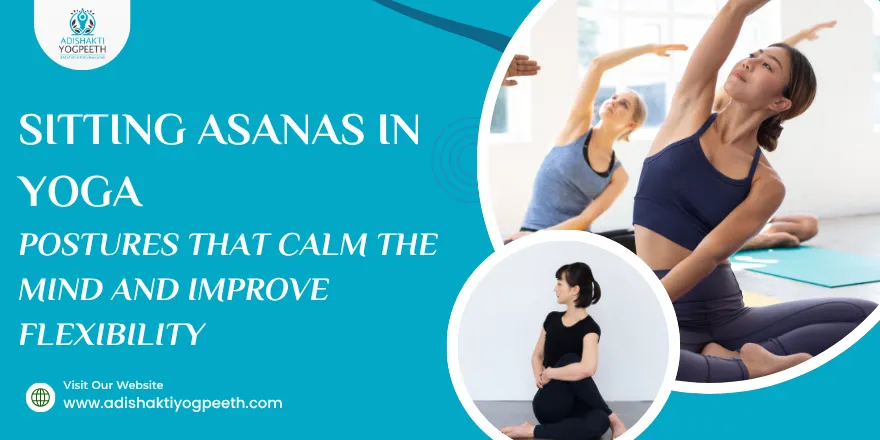
Seated poses, asanas in sitting position, are asanas performed while sitting on the floor, usually with the spine erect, the legs crossed or extended.
These poses are grounding, stabilizing and balancing, which is why they are so perfect for meditation, pranayama, and relaxation. In contrast to active standing asanas that develop strength and endurance, sitting asanas tend to stillness, breath control and concentration of mind.
According to yogic ideology, in sitting poses, the prana (life force) is directed through the spinal cord which helps in energizing the different chakras or energy centers of the body especially the root and sacral chakras which are grounded warm and balanced.
These are postures from which advanced meditative practices and pranayama techniques that are taught in the yoga teacher training in rishikesh typically begin.
The Philosophy Behind Sitting Yoga Asanas
Ancient yogic scriptures such as Hatha Yoga Pradipika and Yoga Sutras of Patanjali discuss sitting postures as the means to meditation and self-realization.
Patanjali informs us about an 'ideal posture' for doing asana: About asana it says - “Sthira Sukham Asanam” - asana is a position where you can be both steady and comfortable.
Seated asanas are a great example of this principle. They keep the body still while the mind turns inwards.
Yogis teach that even the act of sitting with awareness roots the practitioner in the now — allowing the mind to move beyond its own activity of restlessness and distraction.
At Adi Shakti Yogpeeth students learn to apply this timeless wisdom in the modern world, integrating physical alignment with the stillness of meditation.
Top Sitting Asanas and Their Benefits
Below are some of the most effective sitting position asanas taught at Adishakti Yogpeeth’s classes and Yoga Teacher Training in Rishikesh — each designed to bring calm and vitality to your practice.
A. Sukhasana (Easy Pose)
Description: Sit cross-legged on the floor with your spine straight and your shoulders relaxed.
Gyan Mudra: Hands rest on knees with palms facing upward.
Benefits of Sukhasana:
- Improves Calmness of the Mind and Concentration
- Opens the Hips, Lengthens the Spine
- Encourages uniform breathing in meditation
- Relieves stress and exhaustion
Ideal for: Newcomers, and meditation veterans.
B. Padmasana (Lotus Pose)
Description: Put each foot on the opposite thigh, with soles facing upward. Keep your back straight and palms on your knees.
Advantages of Padmasana:
- Enhances flexibility of hips and also improves overall posture
- Activates pelvic and stomach organs
- Suitable for pranayama and meditation
- Harmonizes the mind and body
Note: It is also recommended that novices practice Ardha Padmasana (Half Lotus) for ease.
C. Vajrasana (Thunderbolt Pose)
Description: Kneel down on the floor and sit back on your heels and keep your back straight.
Advantages of Vajrasana:
- Helps digestion after meal
- Strengthens lower back and thighs
- Enhances concentration and mental alertness
- Eases menstrual pain
What to Know: It’s one of the rare poses you can safely perform right after eating — which is why it’s a staple in diet and yoga regimens.
D. Baddha Konasana (Bound Angle Pose)
Description: Sit with the soles of your feet together and your knees dropping out to the sides. Hold your feet and press the knees down towards the floor.
Benefits:
- Increases flexibility in the hips and inner thighs.
- Promotes blood flow to pelvic organs.
- Soothes tired legs and menstrual cramps.
- Soothes the nervous system.
Great For: Prenatal and women's health yoga.
E. Ardha Matsyendrasana (Half Spinal Twist)
Description: Sit with one leg crossed over the other. Twist your torso toward your bent knee, while maintaining a tall spine.
Benefits:
- Enhances spinal mobility and digestion
- Cleanses internal organs
- Detoxifies internal organs
- Promotes energy flow up the spine
- Alleviates neck and shoulder tightness
Classic expression of sitting yoga asanas that balance both strength and serenity.
F. Paschimottanasana (Seated Forward Bend)
Description: Sit with your legs extended in front of you and then bend forward at the hips as you reach toward your feet.
Advantages:
- Stretches the spine, shoulders, and hamstrings
- Soothes the mind and the body
- Firms abdominal organs
- Enhances flexibility and metabolism
Ideal for unwinding following a busy day of activity.
G. Gomukhasana (Cow Face Pose)
Description: Fold your legs at the knees one over the other, stack them and grip your hands at the back.
Benefits:
- Open chest and shoulders
- Increase hip mobility
- Improves concentration and balance
- Dissolves repressed emotional strain
Gomukhasana is a lesson in patience — both physical and mental.
H. Dandasana (Staff Pose)
Description: Sit with your legs outstretched, your toes pointing upwards, and your palms on either side of your hips.
Benefits:
- Strengthens and tones the core and back muscles.
- Improves posture and alignment.
- Basic pose for other sitting asanas.
- Promotes awareness and discipline.
Simple, yet it engenders yogic stillness at its very core.
Benefits of Sitting Asanas
The advantages of performing asanas in sitting posture are not restricted to merely physical flexibility.
These are the postures that cultivate patience, mindfulness, and emotional resilience — all necessary ingredients for a well-rounded yogic existence.
Physical Benefits:
- Seated poses provide a good stretch for the hips, hamstrings, and lower back, and contribute to overall flexibility.
- They also increase blood flow, posture and core strength.
- Several poses such as Vajrasana and Ardha Matsyendrasana aid in digestion and cleansing.
Mental & Emotional Benefits:
- Practiced with awareness, seated yoga poses are tranquilizing to the nervous system and induce a meditative quality.
- They take down levels of stress hormones, increase focus and provide a sense of inner stillness.
- Constant practice enables practitioners to subside anxiety, irritability, restlessness, and nurture a deep sense of peace.
Sitting Asanas in Yoga Teacher Training in Rishikesh
At Adi Shakti Yogpeeth, sitting is not taught asana as a mere physical exercise — the asanas have deeper meanings related to self-exploration. While training for the yoga teacher program in rishikesh students will learn how prana flow, energy, and emotional balance is affected by each asana.
Yogic anatomy teaches us that when we sit with proper posture, we are supporting our spine and nervous system in a way that allows us to breathe fully and that prepares us for pranayama and meditation. They are also taught how to sequence sitting asanas in a manner that feels good — to create, enter into, and come out of holistic practice combined with breathwork, chanting, and relaxation.
This profound marriage of philosophy and practice ensures that sitting asanas are a life-altering experience for would-be yoga teachers.
The Role of Breath and Mindfulness in Sitting Postures
Breath is the medium of connection between the body and mind. 2. Controlled Breathing in Sitting Postures: Breath Control or Pranayama increases concentration and steadies the body in sitting postures.
Yogis will frequently pair asanas such as Padmasana or Sukhasana with practices like Anulom Vilom (alternate nostril breathing) or Bhramari (humming bee breath) breathing.
This alignment of posture, breath, and attention quiets your mind and allows you to enter more deeply into the contemplative state. It is in this unflinching quietude where a yogi finds poise, lucidity, and serenity — which also is the very meaning of yoga.
Common Mistakes to Avoid in Sitting Yoga Asanas
Although seated poses may appear to be relatively easy, they still need to be performed with great care and plenty of patience.
Many practitioners have knee or back pain from doing it wrong.
To prevent this:
- Maintain a tall and relaxed spine.
- Place a cushion under the hips if the knees do not reach the floor.
- If you aren’t flexible lived, don’t force your legs into lotus position.
- Practice consistently but mindfully.
Remember — yoga is not about perfection but progress.
And each student is gently coaxed through modifications according to their body type at Adi Shakti Yogapeeth, ensuring that each yogi feels comfortable and safe while undertaking their practice!
Incorporating Sitting Asanas into Daily Practice
You don’t need to sit in asanas for long hours to reap benefits.
Even 10 to 15 minutes a day of being mindful in sitting postures can result in discernible outcomes.
- Start your day with Sukhasana and breathing deeply.
- Sit for digestion in Vajrasana after eating.
- Finish your day with Baddha Konasana or a short meditation in Padmasana.
With practice, you will notice your body opening, your breath becoming more rhythmic, and your mind becoming more serene.
Such mini-meditations can change how you travel through life — with ease and consciousness.
Yoga and Diet: Supporting Sitting Asanas Practice
Your diet has a significant part in keeping you flexible and still during sitting asanas.
From a yogic perspective, what you eat impacts the mind’s energy and clarity.
At Adi Shakti Yogpeeth we do encourage students to embody the lightness of sattva through diet - i.e. eat light, fresh, plant based food that nurtures you without creating heaviness.
Proper nutrition can facilitate extended durations of sitting, steadier breath, and increased concentration.
This harmonious fusion of yoga and diet creates a foundation for whole-health and mindfulliving.
Why Practice Sitting Asanas at Adi Shakti Yogpeeth
Training under expert supervision can transform your experience of practicing from physical endeavour to spiritual metamorphosis.
At the Adi Shakti Yogpeeth, Rishikesh, sitting asanas are taught as a whole yogic journey — combining philosophy, alignment, and energy consciousness.
Students not only master the postures but also the skill of teaching them safely and competently – an important aspect of yoga teacher training in Rishikesh.
With intimate classes, genuine teaching, and tranquil Himalayan beauty, the institute creates the perfect setting to let yoga infuse your life.
Conclusion
Sitting asanas remind us that stillness is strength.
When they are done consciously, they open the body, quiet the mind and bring us into alignment with our inner rhythm.
Whether you are a new meditator looking for peace, or an experienced practitioner expanding your practice, these postures hold the key to self-discovery.
The practice of sitting asanas at Adi Shakti Yogpeeth is more than just flexibility — it's a movement inward, a link between motion, breath, and awareness.
“When the body sits in stillness, the mind finds freedom.”
Embrace these timeless postures, and let your yoga journey unfold with grace, balance, and awareness.
Frequently Asked Questions (FAQs) On Sitting Asanas in Yoga
1. What are sitting asanas and its significance?
Sitting asanas or sitting posture in Yoga are yogic postures that you perform while sitting and these postures help in developing stability, mindfulness and awareness of your breath. They balance the mind for meditation and pranayama, while opening the hips and lengthening the spine. The postures also relax the nervous system, relieve stress, and allow breathing to move deeper — which is why they are so beneficial for yoga newbies as well as seasoned practitioners.
2. Is it easy for beginners to do sitting yoga asanas?
Yes. Sitting yoga asanas (postures) like Sukhasana, Vajrasana are quite easy and are recommended for beginners. Everyone can learn to sit with more flexibility and ease with practice and direction. Using props (like cushions or folded blankets) under your hips can make these postures easier for beginners while keeping your spine nice and straight.
3. How do sitting asanas help in enhancing concentration and relaxation?
When exerted with proper breathing, sitting asanas stimulate the parasympathetic nervous system — which is the body’s relaxation mechanism, these asanas are an efficient stress busters. This stillness is what makes posture special and, over time, allows our mind to become more still, which enhances focus, clarity, and emotional equanimity. As this process continues, you will find yourself less anxious and more likely to enter into deep meditation.
4. What’s the teaching method of sitting asanas in Rishikesh yoga teacher training?
In Adi Shakti Yogpeeth is taught, in all its aspects, sitting asanas in a very methodical way... with alignment, with anatomy and with energy. They are taught how to lead others safely in sitting postures, how to use them for meditation, how to integrate silemment with breath and pranayama, and how to adapt them to kunda flow of practice and to daily routines. This integrative process is what allows students to teach with confidence anywhere.
5. In what way yoga and diet help the practice of sitting postures?
Diet has an effect in both agility and concentration of the body. A Sattvic diet based on fruits, vegetables and whole grains makes the body flexible and calms the mind, which is fundamental for more profound sitting practices. Stay away from greasy, processed or hot foods to keep sluggishness away from meditation. Students are also invited to maintain a balanced yogic nutrition which supports asana and pranayama practice, living foods etc.