Table of Contents
What Is Meditation (In Simple Words)?
Meditation is, in essence, a practice of awareness—of your breath, your thoughts, and the state you are in emotionally and mentally, without judgement. You don’t try to stop thinking. Rather, you see your thoughts, and gently come back to the present moment.
For new users, meditation is really less about technique and more about consistency. Just a few mindful moments can leave subtle imprints that, gradually, magnify.
Why Meditation Is Perfect for Beginners Today
A lot of beginners have the impression that meditation is complex or spiritual in a sense that it's not familiar. Meditation is incredibly practical and informed by science nowadays.
Beginners can also benefit from practicing meditation to:
Stress and anxiety reduction
Better focus and decision-making
Sleep better
Balanced EmotionallyFeeling emotionally balanced
The great thing about meditation is that you don’t need any experience, flexibility or equipment. You just need willingness.
How to Meditate for Beginners: A Step-by-Step Guide
If you are asking yourself how to meditate for the first time, here are a few simple steps you can take. This is a pragmatic method for daily use in your routines and rituals.
Step 1: Select a Comfortable LocationYou don’t need a special meditation room or incense. Select a quiet, cozy location where you can be alone — your bedroom, living room, or even a small office cubicle.
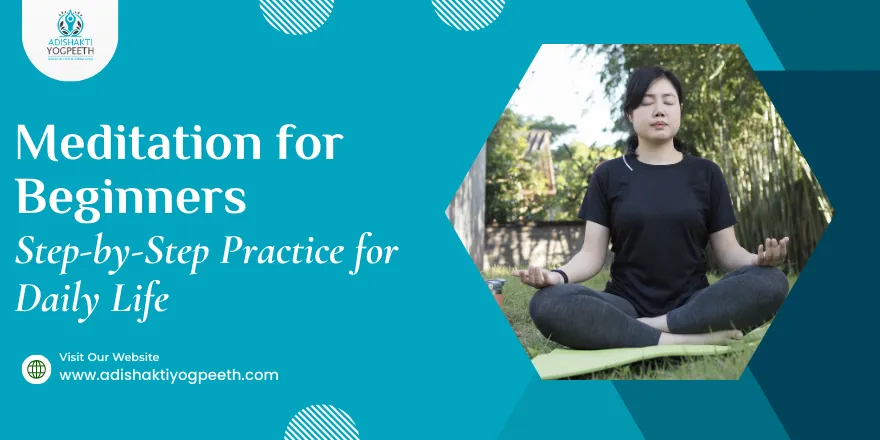
Step 2: Sit Comfortably (No Need for Perfect Posture)Sit on a chair or on the floor with a cushion. Let your spine be naturally upright and relaxed. If you find it uncomfortable to sit on the floor, you can sit in a chair.
It’s not about forcing the body to. Comfort supports focus.
(If you would like to prepare your body, gentle stretching or Yoga Poses for Beginners may assist you in sitting more comfortably prior to meditation.)
Step 3: Set a Short Time LimitStart with 5 min. Sufficient for now.
A lot of people who are just getting started give up because they try to do “too much too soon.” Meditation develops through incremental movement.
Step 4: Bring Attention to Your BreathClose your eyes softly. Focus your attention on your natural breath.
Breathe air through your nose
Notice the rise and fall of your chest or belly
Don’t control your breathing. Just watch it.
Step 5: Allow Thoughts to Pass Through Your MindYour mind will wander — and that’s normal.
When you observe your mind wandering:
Recognize it
Softly return your focus to your breath
Just this one act is meditation.
Step 6: Finish SoftlyWhen the time is up, slowly open your eyes. Before you get on with your day, just stop for a moment and see how you’re feeling.
How to Meditate for Beginners at Home
How to Meditate for Beginners at Home Without Guidance Or a Teacher is one of the most searched queries on the Web.
Here’s how to make home meditation work:
Choose the Same Time Every Day (Morning or Evening Are the Best Options)
Don’t expect too much from it
Use silence or play some soft, instrumental music
Do not multitask.
It’s not necessary for your home to be quiet — it just needs to be safe and familiar.
How to Start Meditation for Beginners Without Feeling Awkward
It's normal to feel awkward at first. It can feel strange to sit silently with your mind.
Here are some tips to help you get started with meditation:
Begin short (3-5 minutes) in duration.
Keep eyes slightly open if you find closing them uncomfortable.
Use guided meditation if needed.
Focus on progress not perfection.
The secret of how to start meditating for beginners is patience—with yourself.
Conclusion
It is not necessary to aim for perfection; there is also no need to spend hours in practice. To beginners, it just means seizing a couple of mindful moments each day to breathe, look around, and touch base with oneself. What you really want to do when you learn how to meditate for beginners is develop a kind of awareness that brings a sense of calm, clarity and emotional equanimity to your everyday life.
Taking it slow, staying consistent, and keeping your expectations realistic makes meditation easy to maintain. Its more natural to the people movement (Yoga Poses for Beginners) added to the sweet sound awareness feels a little rooted. Like anything else, meditation may become a solid and supportive part of your daily routine with time.
Frequently Asked Question
1. How to do meditation for beginners?
Meditation for beginners involves sitting comfortably, paying attention to natural breathing, and gently returning your focus when your mind drifts. Doing so for 5–10 minutes per day over time results in the development of alertness, tranquility, and clarity of mind.
2. How to meditate at home for beginners?
Find a quiet place, at home if you wish, sit comfortably, and pay attention to your breathing in order to meditate. Begin with brief periods and practice at the same time each day to establish a straightforward and dependable meditation routine.
3. What is the simplest meditation for a beginner?
Simple breath awareness is the simplest form of meditation for a novice. Sit comfortably, breathe normally, and pay attention to the ins and outs of your breathing. You may find your thoughts distracting you – that’s okay, just gently bring your attention back to the breath without any judgment.
4. Do I need a teacher to meditate as a beginner?
Indeed, beginner can begin their meditation practice without an instructor by simply sitting and breathing in a peaceful environment. Beginning with brief periods of time and being consistent allows for the development of self-confidence and an established personal practice.
5. How many minutes of meditation should beginners do daily?
Even novices should start with 5 minutes of meditation a day and then slowly work their way up to 10 or 15 minutes. Consistent practice for a short period is better than inconsistent practice for a long period.
6. When is the best time to meditate for a beginner?
Morning is best for beginners as it creates mental clarity for the day, but evening meditation helps to relieve stress. The right time is the time where you are able to practice regularly and undisturbed.
7. Is It normal for beginners to be restless when meditating?
Yes, restlessness is normal for beginners. Meditation allows us to watch our thoughts and emotions without becoming involved. As you keep practicing, your mind slowly settles and focuses more and more.
8. Is it OK for beginners to meditate in a chair?
Yes you can mediate on a chair as a beginner if sitting on the ground is too uncomfortable. The only thing that really matters is that the spine remains straight and the rest of the body relaxed to allow for the best possible breathing and attention.
9. Is it necessary for beginners to do yoga before meditation?
Light yoga before meditation enables one to relax the muscles of the body and increases comfort while sitting. Basic stretching or Simple Yoga Poses for Beginners can open up the body and make meditation easier and more effective.
10. How soon can you expect to see results from meditation?
New meditators can experience minor benefits such as calmness and improved focus as early as a few weeks into their practice. The cumulative benefits of sustained practice also help alleviate stress and promote emotional regulation and general mental health.