Table of Contents
What Is Sound Healing?
Sound healing is a type of sound therapy in which the body responds to the sound frequencies by initiating healing. These sounds and rhythms resonate with the cells of the body, nervous system and energy fields to create balance where there is dis-ease.
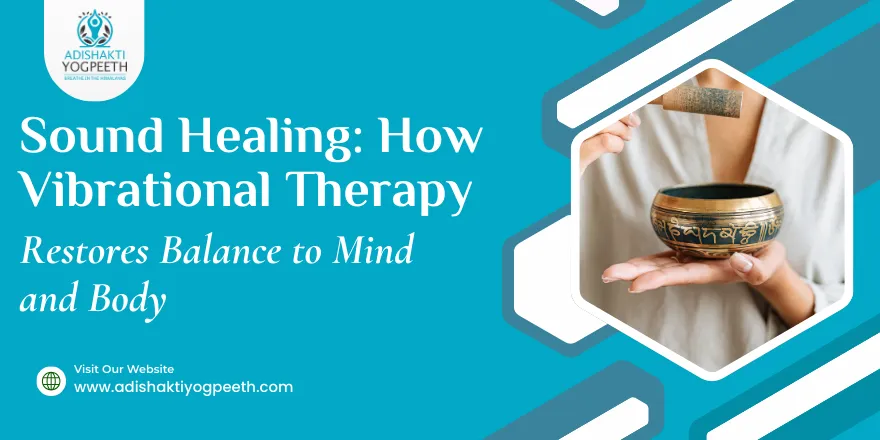
Common Instruments Used:- Tibetan and Crystal singing bowls
- Gongs, Drums, and Chimes
- Tuning forks and Harmonium
- Mantra chanting and Vocal Toning
The Science Behind Sound Healing Therapy
While ancient, modern science explains how vibrational therapy works through several key mechanisms:
1. Brainwave Entrainment
Your brain naturally syncs with external frequencies. Sound healing can influence your brainwaves to reach Alpha (relaxed), Theta (meditation/creativity), or Delta (deep healing/sleep) states.
2. Resonance and Cellular Vibration
Every cell in your body vibrates. This phenomenon, known as sympathetic resonance, helps cells revert to their natural oscillation when exposed to healing frequencies.
3. Regulating the Nervous System
Sound therapy helps turn off the "fight or flight" response (sympathetic) and activates the "rest and digest" system (parasympathetic), encouraging hormonal equilibrium.
Types of Sound Healing Practices
1. Tibetan Singing Bowl Therapy
Roots in Himalayan practices; these bowls emit harmonic overtones that affect the brain at a subconscious level, improving circulation and reducing stress.
2. Gong Bath Therapy
A "bath" in multiple layers of complex sound vibration which gently dissolves stress, tension, and deep-seated emotional imbalances.
3. Mantra Chanting
Chanting sacred sounds like Om or the Gayatri Mantra stimulates the vagus nerve and enhances oxygen flow throughout the body.
Benefits of Sound Healing Therapy
The advantages of sound healing go far beyond relaxation; it provides a wholistic transformation:
- Decreases Stress: Lowers cortisol levels naturally.
- Facilitates Emotional Healing: Releases past trauma and energetic blockages.
- Promotes Better Sleep: Highly effective for insomnia and nighttime anxiety.
- Physical Healing: Helps manage chronic pain, headaches, and muscle tension.
- Chakra Balancing: Aligns healing frequencies with specific energy centers.
How a Typical Sound Healing Meditation Session Works
Sessions usually range from 45 to 90 minutes. You can expect:
- Lying comfortably on a mat with props.
- Initial breathwork to prepare the mind.
- Immersive sound immersion from various instruments.
- A period of profound silence at the end for integration.
Rishikesh, the yoga capital of the world, is the global hub for learning this art. Many students who join our 100 Hour Yoga Teacher Training also explore a sound healing course in Rishikesh to deepen their practice.
Frequently Asked Questions
1. What is sound healing therapy?
It is an alternative therapy that uses therapeutic frequencies to restore the mind, body, and soul utilizing instruments like bowls, gongs, and mantras.
2. Can beginners do sound healing?
Yes, it is open to all, requiring no prior experience in meditation or yoga.
3. Where can I learn sound healing in India?
Rishikesh is the primary center. Adishakti Yogpeeth offers authentic Himalayan vibrational practices rooted in yogic tradition.