Table of Contents
- Understanding Dhyana Mudra: Meaning and Significance
- Historical and Spiritual Origins of Dhyana Mudra
- Dhyana Mudra Hand Position Explained
- Dhyana Mudra Steps: How to Practice Correctly
- Dhyana Mudra Meditation: Deepening Inner Awareness
- Dhyana Mudra Benefits for Body, Mind, and Spirit
- Dhyana Mudra in Different Yogic Paths
- Common Mistakes to Avoid While Practicing Dhyana Mudra
- Final Thoughts
- Frequently Asked Question
Understanding Dhyana Mudra: Meaning and Significance
dhyana is a Sanskrit word which means intense meditation or concentration. Mudra means gesture or seal. As a result, dhyana mudra is the meditative posture, representing poise, equanimity and self-awareness.
From the yogic perspective, meditation is more than an action-it is a way of life. Dhyana mudra meditation also facilitates the traveler to move from the fluctuations of mind to a steady focused state of consciousness. This mudra forms a subtle energy circuit in the body that calms the mind and guides it to higher levels concentration (dharana) and absorption (samadhi).
Historical and Spiritual Origins of Dhyana Mudra
Originality in Ancient Indian Yogic Tradition
Use of dhyana mudras in meditation dates back to Vedic period. Yogic scriptures narrate that rishis were able to sit for hours in meditation with their hands in such mudras. The finger and the palm position was also believed to help with the control of prana (life energy) and the stimulation of higher states of mindfulness.
Dhyana Mudra in Buddhism
Dhyana mudra One of the most classic images of the dhyana mudra, as seen in the statues of Gautama Buddha. It is not uncommon to see the Buddha portrayed sitting in meditation with his hands in dhyana mudra, which represents the Buddha’s enlightenment, his equanimity, and the silence of his mind. In Taoism and Buddhist, this finger sign symbolizes the harmony between wisdom and compassion.
Dhyana Mudra in Hatha and Raja Yoga
In classical yogic tradition (Hatha Yoga and Raja Yoga) it is the seventh limb of Ashtanga Yoga of Sage Patanjali. Yoga dhyana mudra is powerful in this respect because it helps to curb the distractions of the senses and allows for one-pointed attention.
Dhyana Mudra Hand Position Explained
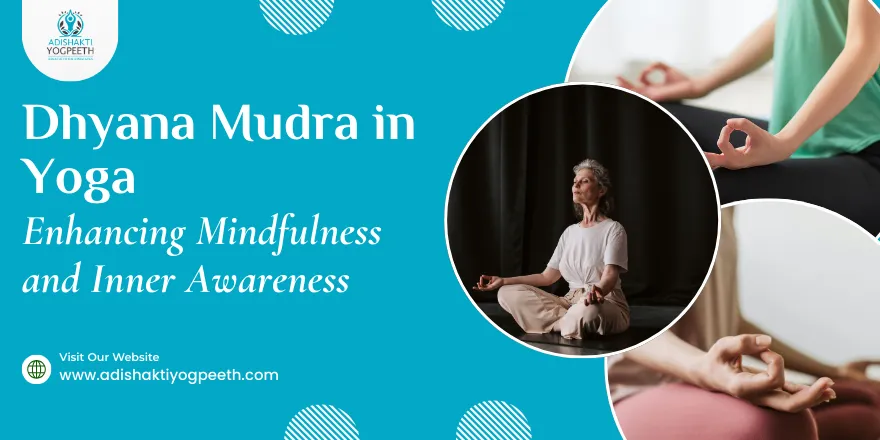
What is the Dhyana Mudra Hand Position? Only with an understanding of the hand position can you get your required dose. However,·being simple does not mean there is no need for precision and awareness.
Correct Dhyana Mudra Position
Sit on your heels or on a cushion in an easy pose like Sukhasana or Vajrasana.
Put your right hand on your left hand.
palms turn up both
The tips of the thumbs are gently touching, creating a faint triangle.
The hands rest naturally on the knees or on the lap just below the navel.
This dhyana mudra posture represents the coming together of two mystic forces of opposites, masculine and feminine, wisdom and deed, intellect and soul).
Symbolic Meaning of the Form of the Hand
Left hand: holds energy of receptivity and intuitive knowing
Right Hand: Symbol of active, conscious mind
Touching thumbs: represent cosmic consciousness and equilibrium
Triangle form: represents body mind and spiritual harmony
For the visual learners, a dhyana mudra sketch quite often demonstrates this symmetry and energy flow very clearly, and can act as a guide for getting your posture right.
Dhyana Mudra Steps: How to Practice Correctly
Thus, following correct dhyana mudra procedure is very important for safe, effective and soul uplifting practice.
Practice Step-by-Step
Select a quiet and clean place to sit where you will not be disturbed.
Sit bequem mit geradem Rücken.
Relax your neck and shoulders.
Place your hands in dhyana mudra as explained.
Gently close your eyes. 20 chars / 4 words
Concentrate on your natural breath, or a mantra.
Observe without force.
Practice for 10-30 minutes daily, preferably at dawn [Brahma Muhurta] or sunset.
Dhyana Mudra Meditation: Deepening Inner Awareness
Dhyana mudra meditation is a means of contacting the physical body and the subtle mind. It decelerates thought while building attention if done consistently.
Practice In Mindfulness Meditation
Mindfulness is being present without beingjudgmental. The firm hand posture in dhyana mudra tells the nervous system that it’s okay to relax, and thoughts come and go more effortlessly.
Connection to breath and attention
Dhyana mudra meditation with focused breathing leads to more intense activation of the parasympathetic nervous system that brings relaxation and mental clarity. It is in this way that it is particularly beneficial in relaxing after stress and balancing emotions.
Dhyana Mudra Benefits for Body, Mind, and Spirit
The benefits of dhyana mudra are said to extend beyond the meditation posture. It affect several layers of existence doing regular practice.
Physical Benefits
Enhances posture and spinal alignment
Relaxes muscles
Improves breath awareness
Promotes nervous system balance
Benefits of Mind and Emotions
Improves focus and recall
Alleviates stress and agitation
Favors emotional stability
Promotes mindfulness seems to be indicated by one finding, yet to be replicated
Spiritual Benefits
Strengthens the experience of meditation
Enables one to be quiet inside
Promotes self-reflectiveness
Aids spiritual awakening
At AdishaktiYogpeeth, students in residential courses like 100 Hour Yoga Teacher Training In Rishikesh are guided to encompass these blessings in daily yogic living.
Dhyana Mudra in Different Yogic Paths
Hatha Yoga
In Hatha Yoga yoga dhyana mudra stabilizes the body after asana and pranayama practice,the yogi is prepared to get involved into meditation.
Kundalini Yoga
Dhyana mudra is used in the Kundalini Yoga Rishikesh course it aids the energy waking up Dhyana mudra keeps you grounded and mentally alert!
Jnana and Bhakti Yoga
For intended on the Journey of Knowledge (Jnana) or Devotion (Bhakti), dhyana mudra helps to foster inner quietude and surrender.
Common Mistakes to Avoid While Practicing Dhyana Mudra
Posture of slouching
Too much tension in hands
Compelling attention
Unsteady practice
Neglect of breath awareness
Proper and experienced guidance of a good teacher (like the teachers at AdishaktiYogpeeth) will make sure that you practice dhyana mudras for meditation safely and effectively.
Final Thoughts
The practice of dhyana mudra is not the attainment of something new, it is the memory of what you already are. With practice, proper knowledge and good intention, this ancient mudra can lead to a living connection between body, mind and soul.
At AdishaktiYogpeeth the spirit of dhyana mudra meditation is imparted not simply as a methodology but as living ethos - born of tradition, relevant in contemporary times and inclusive of genuine aspirants.
Frequently Asked Question
1. What is dhyana mudra in yoga?
In this context, Dhyana Mudra is a yogic practice that increases concentration, attention and self-awareness and can be considered Yoga hand position for meditation and mindfulness in Cooperation. It is done as one hand over the other, with the thumbs touching while sitting meditation.
2. What are the main dhyana mudra benefits?
The benefits of Dhyana Mudra are as follows: This mudra helps we in thinking, developing concentration, and calming mind as well as emotions. Consistent use promotes relaxation of the nervous system, mindfulness, and spiritual awareness and inner resilience.
3. How do you make the hand gesture of dhyana mudra?
The formation of the hands for the dhyana mudra is now placed with the right hand on top of left hand, palms upward , with thumb tips gently touching. The hands rest on the lap, and she is sitting comfortably with an erect spine.
4. When should I do dhyana mudra meditation?
Dhyana Mudra Meditation is ideally done in the early morning, or late at night in a peaceful peaceful place. These periods promote cognition, less distractions, and a stronger focus on the inside during meditative practice.
5. Is Yoga Dhyana Mudra good for beginners?
Yes, in fact beginners are advised to do yoga dhyana mudra. It’s a mild and approachable meditation pose, no exertion is needed, so it’s ideal for all ages and levels of experience.