Table of Contents
- Understanding Yoga’s Benefits for Students
- Types of Yoga and Their Benefits for Students
- Benefits for Students Across Different Age Groups
- The Powerful Combination: Yoga and Meditation
- Yoga’s Impact on the School Environment
- How to Start a Daily Yoga Practice
- Overcoming Common Challenges for Students
- The Science Behind Yoga’s Benefits
- Building Lifelong Healthy Habits
- Conclusion: Yoga for Academic and Life Success
Understanding Yoga’s Benefits for Students
Yoga is more than just physical exercise; it’s a holistic system that integrates mindfulness, breathing techniques, and movement. For students, yoga offers a pathway to excel academically, navigate social challenges, and foster personal growth.
Physical Health Benefits
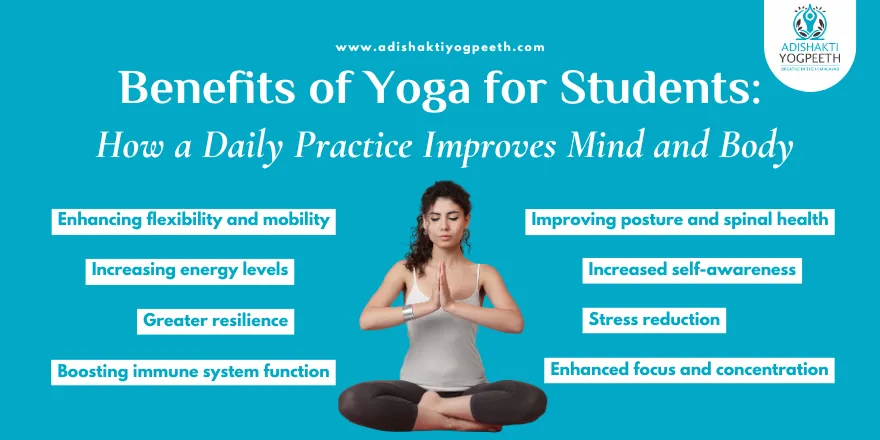
Students often spend hours hunched over desks, carrying heavy backpacks, or maintaining poor posture. Yoga addresses these physical challenges by:
- Improving posture and spinal health through core-strengthening exercises.
- Enhancing flexibility and mobility to counter stiffness from prolonged sitting.
- Boosting the immune system to keep students healthy during demanding school schedules.
- Promoting better sleep, which improves energy levels and cognitive function essential for academic success.
Mental and Emotional Benefits
The mental demands of school can lead to stress, anxiety, and depression. Yoga helps students by:
- Reducing stress by activating the parasympathetic nervous system.
- Improving focus and concentration through mindfulness practices.
- Enhancing emotional resilience to handle academic and social pressures.
Types of Yoga and Their Benefits for Students
Different types of yoga cater to varied needs, allowing students to choose a practice that aligns with their goals.
Hatha Yoga: A Gentle Introduction
Hatha yoga is ideal for beginners, focusing on basic poses and breathing techniques. It:
- Enhances body awareness and proper breathing.
- Reduces tension without overexertion.
- Builds foundational strength and flexibility.
Vinyasa Yoga: Energizing Flow
Vinyasa yoga involves dynamic sequences, perfect for students seeking movement. It:
- Improves cardiovascular health.
- Enhances balance and coordination.
- Promotes mental clarity through movement meditation.
Restorative Yoga: Deep Relaxation
Restorative yoga is excellent for stress relief, offering:
- Deep muscle relaxation.
- Nervous system reset.
- Improved sleep and reduced stress hormones.
Yin Yoga: Mental Calm
Yin yoga, with its slow-paced, long-held poses, provides:
- Release of deep tissue tension.
- Increased flexibility.
- Emotional healing and meditative calm.
Benefits for Students Across Different Age Groups
Elementary School Students
Yoga supports young children by:
- Enhancing physical development, including motor skills and coordination.
- Improving focus, behavior, and self-regulation in class.
- Fostering empathy, social skills, and confidence through fun, interactive poses.
High School Students
Teenagers benefit from yoga through:
- Stress management during exams and academic pressures.
- Improved self-esteem and emotional regulation.
- Support for physical growth and injury prevention.
College Students
College students find yoga helpful for:
- Enhancing focus and creativity during intense study sessions.
- Managing life transitions, such as homesickness or new social environments.
- Promoting self-care and lifelong wellness habits.
The Powerful Combination: Yoga and Meditation
Combining yoga and meditation amplifies their benefits, preparing the body for stillness and enhancing mental clarity.
Cognitive Benefits
Yoga and meditation together improve:
- Neuroplasticity for better learning.
- Working memory for retaining information.
- Decision-making and focus for complex tasks.
Emotional Intelligence
This dual practice fosters:
- Greater self-awareness and empathy.
- Improved conflict resolution and communication skills.
Stress Management
Yoga and meditation provide:
- Physical relaxation through poses.
- Mental clarity through meditation.
- Breathing techniques for immediate stress relief.
Yoga’s Impact on the School Environment
Yoga in schools creates a positive environment by:
- Reducing behavioral issues and improving academic performance.
- Fostering inclusivity and reducing bullying.
- Supporting teachers with stress management and innovative teaching methods.
How to Start a Daily Yoga Practice
Getting Started
Students can begin with:
- Free online resources or campus yoga classes.
- Short 10-15 minute sessions with friends for motivation.
Building Consistency
For lasting results:
- Set achievable goals and practice at consistent times.
- Create a dedicated space for yoga, even in a small dorm room.
- Track physical and mental progress.
Integrating with School Life
Adapt yoga to busy schedules with:
- 5-minute breathing breaks between classes.
- Gentle stretches during study sessions.
- Relaxation practices before exams.
Overcoming Common Challenges for Students
Time Constraints
Short sessions fit busy schedules:
- 10-minute morning sequences.
- 5-minute study breaks.
- 15-minute evening relaxation.
Financial Barriers
Affordable options include:
- Free online videos and library resources.
- Campus recreation center classes.
Limited Space
Practice in small spaces with:
- Chair yoga or standing sequences.
- Breathing exercises anywhere.
- Outdoor campus practices.
The Science Behind Yoga’s Benefits
Cognitive Benefits
Research shows yoga increases:
- Gray matter in learning-related brain areas.
- Brain connectivity and decision-making.
- Reduced amygdala activity for less fear response.
Physical Health Benefits
Studies confirm yoga reduces:
- Cortisol levels for lower stress.
- Improves heart rate variability and immune function.
- Enhances sleep quality.
Academic Performance
Yoga correlates with:
- Higher grades and test scores.
- Increased class attendance and lower dropout rates.
Building Lifelong Healthy Habits
Yoga fosters habits that last beyond school, including:
- Effective stress management.
- Stronger interpersonal relationships.
- Balanced work-life integration.
- Lifelong physical and mental health.
Conclusion: Yoga for Academic and Life Success
Yoga is a powerful tool for students navigating the challenges of modern education. From elementary school to college, it supports physical, mental, emotional, and spiritual growth. By addressing academic stress, social pressures, and personal development, yoga empowers students to thrive. With various styles to choose from, every student can find a practice that suits their needs. Daily yoga and meditation not only enhance academic performance but also lay the foundation for lifelong health and well-being, helping students excel in school and beyond.