Table of Contents
What Is Pranayama?
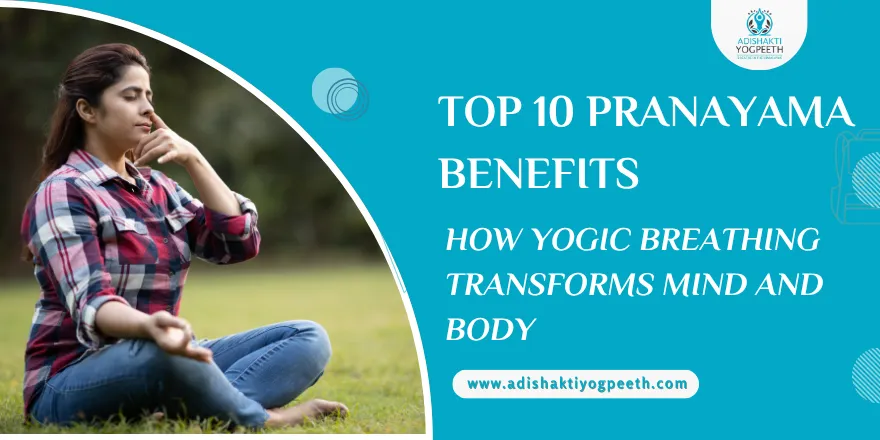
Pranayama is more than breathing deep. It is a stepwise practice of inhaling (Puraka), retaining (Kumbhaka) and exhaling (Rechaka) our Prana (life energy) in a regulated manner.
Pranayama is the link between the external practices of body postures (asanas) and meditation according to the Hatha Yoga Pradipika and Patanjali’s Yoga Sutras. It is a way you get your body ready to be still and your mind ready to be aware.
Pranayama improves oxygen supply, strengthens the nervous system, cleanses the organs and elevates the mood — so much so that it’s a staple in every yoga teacher training in Rishikesh.
The Connection Between Breath and Life Energy
Every inhale and exhale has an immediate impact on the way we feel mentally. The body receives a signal to stress when breathing rapidly or when breathing is shallow. When it’s long and deep, relaxation naturally sets in.
Ancient yogis also discovered that by consciously directing the breath one could influence the flow of Prana (life force) through energy channels (Nadis) and the mind-body system. This regulation of the nervous system increases energy, immunity, and mental function — the important benefit of pranayama and the benefit of health that science is still supporting.
Top 10 Pranayama Benefits (Scientifically & Spiritually Proven)
Let’s uncover the most impactful pranayama yoga benefits — from better focus to glowing skin and emotional healing.
1. Enhances Respiratory Health and Capacity of the Lungs
One of the top health benefits of pranayama is that it helps improve lung function. Breathing exercises such as Anulom Vilom (alternate nostril breathing) and Bhastrika (bellows breath) increase lung capacity, the strength of respiratory muscles, remove mucus or toxins.
There are many scientific studies available that prove regular practice of pranayama better oxygenation and more efficient pulmonary function — which can be greatly beneficial for those with asthma, allergies, or sedentary living.
Tip: Close daily for 10 minutes and breaths slow and rhythmic in a quiet place to start to see results.
2. Decreases Stress and Anxiety
When you’re feeling frazzled, life may seem like too much, but pranayama is your inner anchor. Practices Nadi Shodhana and Ujjayi helps soothe the nervous system and trigger the relaxation response of the parasympathetic nervous system.
This decreases levels of cortisol (the stress hormone), reduces heart rate, and relaxes the body.
Scientific Explanation: Slow breathing has been found to decrease anxiety and improve autonomic balance in a 2018 study in Frontiers in Psychology.
3. Enhances Focus, Memory, and Cognitive Power
Students and professionals today are bombarded with distractions. Practicing pranayama increases oxygenated blood to the brain, which enhances attention, decision making and information storing in memory.
See for yourself: Bhramari Pranayama (humming bee breath) — breathe in deeply and breathe out with a quiet humming. It calms the mind and enhances concentration.
4. Balances Hormones and Supports Emotional Well-being
The endocrin system is stimulated by Pranayama via the hypothalamus and the pituitary glands. Consistent use may help to correct hormone imbalances, stabilize mood swings and with the symptoms of pms or menopause.
Scientific fact: Research has demonstrated that pranayama positively affects the balance of cortisol, adrenaline, and insulin.
5. Detoxifies the Body and Strengthens Immunity
Pranayama causes one to exhale fully, and by a repeated application of breath with a a steady pace it helps in removing the carbon dioxide and other harmful gases from the lungs and blood. It promotes lymph flow — the body’s intrinsic cleanse — and immunity. Again, check out our Kapalabhati Pranayama(Kapal Bhati Breathing) — short sharp expulsions do a lot to keep the lungs clean and the body energized.
6. Promotes Glowing Skin and Anti-Aging
One of the lesser known but amazing benefits is that pranayama can make your skin glow! Oxygenation leads to better blood flow which imparts a glow on the skin. Detoxifying can treat acne, dull skin, and pigmentation — that’s three of the top pranayama perks for your skin.
7. Promotes Heart and Circulation Health
The rhythm of your breath directly influences the rhythm of your heart. Slow, deep breathing lowers blood pressure, improves circulation and cardiac performance.
Several physiological advantages of pranayama studies demonstrate that it can reduce the risk of high blood pressure and enhance oxygen utilization in the heart muscles.
8. Raises Energy Levels and Vitality
Methods such as Bhastrika and Kapalabhati increase pranic flow and wake up lethargic energy as well as boost acuteness of mind without tiring.
Pro tip: Do this in the early morning hours on an empty stomach for best results.
9. Enhances Sleep Quality and Emotional Calmness
Restlessness and insomnia are frequently caused due to a busy mind. Slow, deep breathing tells the brain that it can relax. Practicing Nadi Shodhana or Chandra Bhedana (left nostril breathing) before going to sleep relaxes the nervous system and relaxes the body for sleep.
10. Awakens Spiritual Awareness
In addition to the physical and mental benefits, the practice of pranayama is the door to spiritual evolution. When prana is allowed to flow freely through the Sushumna Nadi (central energy channel), the mind becomes still and awareness expands.
Scientific Benefits of Pranayama: What Research Says
Modern science is beginning to confirm what yogis have known for thousands of years. Here are some scientifically proven benefits of pranayama:
- Enhanced Pulmonary Function: The capacity of lungs can be increased by pranayama- Journal of Clinical Research and Education Lung vital capacity and respiratory endurance is improved by practice of pranayama.
- Decrease Anxiety and Depression: Deep breathing increases levels of GABA, the neurotransmitter associated with relaxation.
- Improved Heart Rate Variability: A stronger more responsive heart and nervous system.
- Cognitive Boost: Findings from a study at AIIMS Delhi demonstrated that pranayama can increase attention span, reaction time, and memory.
- Anti-Inflammatory Effect: Prayanaama decreases inflammatory markers like IL-6 and CRP leading to sense of well-being.
These findings confirm that pranayama isn’t just spiritual—it’s profoundly physiological.
Benefits of Asana and Pranayama Together
While Asanas (postures) shape the physical body and mind in a manner that facilitates the reception of prana, Pranayama works on the breath and energy to enhance flow through it. Now, you are getting the best of both worlds.
- Asanas increase flexibility and strength.
- Pranayama expands consciousness, slows down the breath and stimulates the soul.
They are complete in themselves, yet in practice complement one another — a balance of doing and being. If you are interested in exploring this confluence and many more visit our Yoga Blog Page for insightful guides.
How to Practice Pranayama Safely
- Practice on an empty stomach — preferably early morning.
- Sit comfortably — spine straight, shoulders relaxed.
- Go slow — 5 to 10 minutes a day, increasing the time gradually.
- Don’t strain — especially in retention or in forced exhalations.
- Consult your certified teacher — especially for advanced pranayama techniques.
- Be consistent — the benefits deepen with regularity rather than intensity.
Why Learn Pranayama in Rishikesh?
Rishikesh — the Yoga capital of the World — provides the ideal spiritual surroundings to learn pranayama. Nestled in the lap of Himalayas and Blessed by Holy river Ganges, where innumerable sages have been practicing yoga since ages.
Our 100 Hour Yoga Teacher Training in Rishikesh at Adi Shakti Yogpeeth will guide you through the classical methods of pranayama and meditation with seasoned teachers. Not only will you learn how to practice, but how to safely and effectively teach others.
Frequently Asked Questions (FAQs) On Pranayama Benefits
Q1: How many minutes do I need to practice pranayama every day?
Begin with 5-10 minutes and work up to 20 minutes. The ideal timing is early in the morning before having breakfast when your stomach is empty and your mind is clear. Practice routinely—regardless of duration—and long-term benefits will come.
Q2: Does pranayama have a positive effect on anxiety and depression?
Yes. The ability to breathe deeply and rhythmically activates the parasympathetic nervous system, which in turn decreases the feeling of panic, quiets the mind, and brightens mood. It’s often advised as part of a prescription for emotional stability along with meditations.
Q3: What is the best Pranayama for skin?
Kapalabhati and Anulom Vilom aid in blood circulation and help detoxing the body while increasing oxygen supply which brings clear and glowing skin as a result.
Q4: Can children or beginners do pranayama?
Absolutely. Simple practices like Anulom Vilom and Bhramari can be practiced by children and those who are brand new to yoga. Do not try these advanced practices until you are supervised by a certified yoga instructor.
Q5: Is pranayama good for students to improve their concentration?
Yes, pranayama helps to oxygenate the brain and improve concentration and cognitive function. Another key benefit of Yoga for Students is its ability to boost memory, focus and emotional harmony.